Artificial Intelligence isn’t just beating humans at chess or Go. Today, an AI puzzle solver can tackle logic games, tricky riddles, and complex strategy challenges faster and more accurately than many humans. Whether you’re a developer, gamer, student, or curious reader, this deep dive will explain how AI solves puzzles, the tech behind it, real-world uses, and what the future holds.
We’ll explore artificial intelligence puzzle solvers from the ground up—how they work, why they matter, what tools exist, and how they push the boundaries of machine reasoning. You’ll walk away with a clear grasp of puzzle AI, its strengths, limitations, and the innovations driving it forward.
What Is an AI Puzzle Solver?
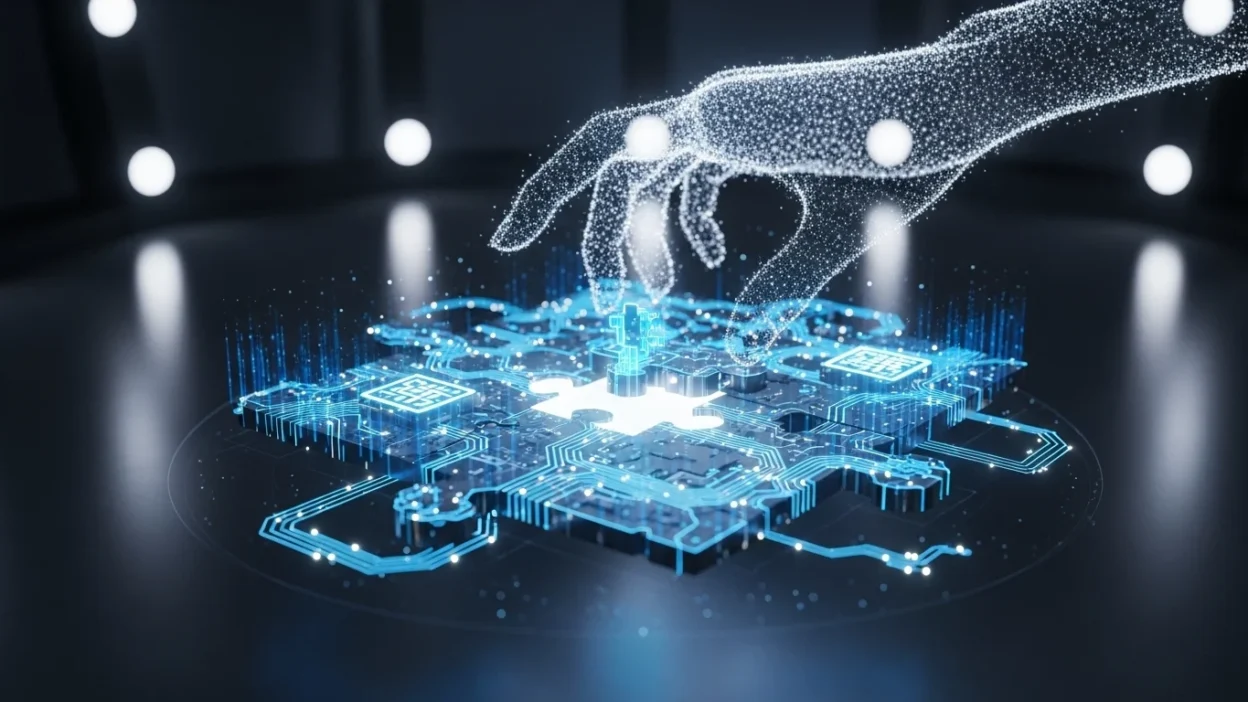
An AI puzzle solver is a system designed to tackle logic problems, strategy games, pattern challenges, and brain teasers using automated intelligence.
Instead of humans manually thinking through steps, AI uses algorithms and data to generate solutions. These systems vary in complexity from basic rule-based engines to advanced neural networks trained on large datasets.
Key functions of an AI puzzle solver include:
- Evaluating a puzzle’s structure (rules, constraints, variables)
- Identifying patterns or sequences
- Searching for optimal or valid solutions
- Generating answers with high accuracy and low time cost
Types of Puzzles AI Can Solve
| Puzzle Type | AI Approach | Example |
|---|---|---|
| Logic puzzles | Constraint solving | Sudoku |
| Word/text puzzles | Natural Language Processing | Crosswords |
| Visual puzzles | CNNs and computer vision | Jigsaw solver |
| Strategy games | Reinforcement learning | Chess, Go |
| Optimization problems | Search and heuristic methods | Travel route puzzles |
Core Technologies Behind AI Puzzle Solvers
AI puzzle solving relies on several key technologies. Understanding these makes the “magic” more tangible.
Machine Learning Puzzle Solvers
Machine learning (ML) uses data to teach systems how to respond. Models learn patterns, rules, and solutions from example puzzles.
- Supervised learning trains on input–output pairs
- Unsupervised learning finds patterns without explicit labels
Example: An ML model can learn Sudoku rules and solve new puzzles by recognizing number placements.
Neural Network Puzzle Solvers
Neural networks mimic brain-like structures. They handle complex reasoning for sequence, image, or text puzzles.
| Architecture | Best For | Why It Works |
|---|---|---|
| CNNs | Visual puzzles | Recognize spatial patterns |
| RNNs / LSTMs | Sequence puzzles | Track order and dependencies |
| Transformers | Language puzzles | Understand context and logic deeply |
Example: A transformer model can solve riddles by analyzing the relationships between words and logic cues.
Cognitive Computation and AI Reasoning
Cognitive computation mimics human-like thinking. AI can:
- Understand puzzle logic
- Make decisions like a human expert
- Represent knowledge symbolically for complex problem-solving
This is especially useful for puzzles requiring true deduction rather than simple pattern matching.
How AI Solves Puzzles: Methods and Algorithms
AI puzzle solving combines reasoning with optimization.
Algorithmic Reasoning
AI uses algorithms to explore possible solutions:
- Backtracking – tries options and backtracks if constraints fail
- Constraint satisfaction – ensures all puzzle rules are followed
- Search algorithms – efficient exploration (Breadth-first, Depth-first, A*, Greedy)
Automated Solution Generation
Once reasoning is done, AI generates answers automatically:
- Reads puzzle input
- Applies rules internally
- Produces output efficiently
Example: Chess engines evaluate billions of possible moves in seconds to select the best one.
Pattern Recognition and Decision Making
AI detects recurring sequences and makes decisions accordingly:
- Identifies patterns in numbers, shapes, or text
- Predicts optimal moves or placements
- Reduces time and computational effort
Types of Puzzles AI Can Solve
AI handles a wide spectrum of puzzles:
- Logic Puzzles: Sudoku, Kakuro, Tower of Hanoi, deduction challenges
- Strategy Games: Chess, Go, complex board games
- Text & Language Puzzles: Crosswords, riddles, word ladders using NLP
- Multi-Modal Puzzles: Mixed formats with images, text, and numbers via multimodal AI
Example: AI can solve a visual Sudoku puzzle (image input) and a textual crossword (NLP) simultaneously.
Real-World Applications of AI Puzzle Solvers
AI puzzle solvers are not just a novelty—they solve real-world problems.
Gaming
- Creates adaptive difficulty for players
- Generates dynamic puzzles and hints
- Powers intelligent NPCs and opponents
Education
- Personalized tutoring for logic and strategy learning
- Tracks student progress
- Provides explanations for steps and solutions
Optimization and Logistics
- Scheduling shipments efficiently
- Planning delivery routes
- Resource allocation and project management
Cognitive Research
- Studies how AI approaches complex problem-solving
- Offers insights into human reasoning
Popular AI Puzzle Solver Tools and Models
| Tool/Library | Use Case | Key Technologies |
|---|---|---|
| TensorFlow / PyTorch | Model training | Deep learning |
| OR-Tools (Google) | Constraint solving | Search & optimization |
| OpenAI GPT | Language puzzles | Transformers & NLP |
| DeepMind AlphaZero | Strategy games | Reinforcement learning |
| SAT Solvers | Logic constraint problems | Boolean inference |
Challenges in AI Puzzle Solving
Even the smartest AI faces hurdles:
- Ambiguous or vague rules: Lack of precise constraints confuses AI
- Natural language complexity: Metaphors and semantics are tricky
- Generalization issues: Models trained on one puzzle type may struggle with others
- Speed vs accuracy trade-off: Some AI prioritizes faster output over perfect solutions
The Future of AI Puzzle Solvers
AI puzzle solvers are evolving quickly:
- Cognitive reasoning: Models simulating human intuition
- Multi-modal AI: Handling text, images, and interaction simultaneously
- Real-time adaptive AI: Dynamically adjusts strategies in games
- Human-AI collaboration: Tools assisting humans rather than replacing them
Conclusion
An AI puzzle solver is a perfect blend of technology and logic. By combining machine learning, neural networks, cognitive computation, and optimization algorithms, AI can crack puzzles humans find challenging.
From gaming to education, research to real world optimization, AI puzzle solvers demonstrate how artificial intelligence can transform problem-solving. As these systems improve, they not only solve puzzles—they expand our understanding of intelligence itself.

Michael Davis writes inspiring and heartfelt messages for readers at wishesfuel.com, creating modern, uplifting wishes that make every celebration memorable and meaningful with his warm, creative voice and captivating style.