You may see the word angina in a health message. Maybe someone texts, “My uncle has angina.” You stop and wonder. What does angina mean? Is it a serious problem? Is it a disease? Many people search for angina meaning because the word sounds scary and medical.
It often appears in hospital reports, doctor talks, and health articles. If you saw this word in a chat or online post and felt confused, you are not alone.
Let’s explain angina in very simple English so you can understand it clearly and without fear.
What Does Angina Mean?
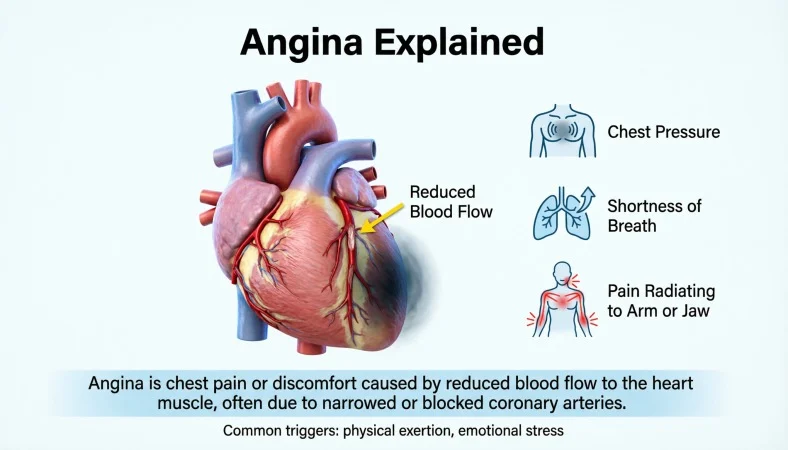
Angina is chest pain caused by low blood flow to the heart.
It happens when the heart does not get enough oxygen.
Doctors call it a warning sign.
This pain can feel tight or heavy.
Some people feel pressure in the chest.
Others feel burning or squeezing.
Angina is not a disease by itself.
It is a symptom of a heart problem.
Simple Explanation of Angina
In easy words, angina means heart-related chest pain.
The heart needs oxygen to work well.
Blood carries oxygen.
When blood flow slows down, pain can happen.
That pain is called angina.
It is the body’s way of saying something is wrong.
Why Does Angina Happen?
Blocked or narrow arteries usually cause angina.
Arteries carry blood to the heart.
Fat deposits can build up inside them.
This makes the space smaller.
Less blood can pass through.
The heart then gets less oxygen.
Pain may start during:
- Exercise
- Stress
- Cold weather
- Heavy meals
When the body works harder, the heart needs more oxygen.
If it does not get enough, angina pain begins.
Common Symptoms People Notice
Chest pain is the main symptom.
The pain may spread to:
- Arms
- Neck
- Jaw
- Back
- Shoulders
Some people feel short of breath.
Others feel tired.
Sweating can happen too.
Nausea may also appear.
Pain usually lasts a few minutes.
It often stops with rest.
Different Types of Angina
Doctors describe more than one type.
Stable angina is the most common type.
This happens during physical activity.
Pain stops after rest or medicine.
Unstable angina is more serious.
It can happen suddenly.
Pain may last longer.
It can happen even at rest.
Variant angina is rare.
It happens because of artery spasms.
This type may occur at night.
All types need medical attention.
How Doctors Diagnose the Problem
Doctors ask about symptoms first.
They check blood pressure.
They may order tests.
Common tests include:
- ECG
- Stress test
- Blood test
- Heart scan
These tests help find blocked arteries.
Doctors then decide the best treatment.
Treatment Options Available
Treatment depends on the type.
Doctors may give medicine.
Common medicines include:
- Nitroglycerin
- Blood thinners
- Beta blockers
Lifestyle changes also help.
In serious cases, surgery may be needed.
Procedures include:
- Angioplasty
- Stent placement
- Bypass surgery
Early treatment lowers risk.
Ways to Reduce the Risk
Healthy habits make a big difference.
Quit smoking.
Eat healthy food.
Exercise regularly.
Control blood pressure.
Manage stress.
Keep blood sugar under control.
These steps protect the heart.
Can Young People Have Angina?
Yes, but it is less common.
It usually affects older adults.
People over 40 have higher risk.
Family history increases chances.
Smoking and obesity raise risk too.
Even young people should care for heart health.
Is Angina Dangerous?
It can be serious.
It warns about heart problems.
Ignoring it is risky.
Unstable angina can lead to heart attack.
That is why quick medical help is important.
Do not ignore chest pain.
Always talk to a doctor.
Angina Meaning in Daily Conversation
In simple talk, someone may say:
“My dad has angina.”
They mean he has heart-related chest pain.
People use the word in health discussions.
It is not slang.
It is a medical term.
It does not have a hidden meaning.
Difference Between Angina and Heart Attack
Many people confuse these two.
Angina is chest pain due to low blood flow.
Heart attack happens when blood flow stops completely.
Angina pain usually goes away with rest.
Heart attack pain lasts longer.
Heart attack needs emergency care.
Both are serious.
Warning Signs That Need Emergency Help
Call emergency services if:
- Pain lasts more than 10 minutes
- Pain is very strong
- You feel dizzy
- Breathing becomes hard
- Sweating is heavy
Do not wait.
Quick action saves lives.
Emotional Impact of Angina
Health problems cause stress.
People may feel fear.
Anxiety is common.
Family members worry too.
Support from loved ones helps.
Talking to doctors gives peace of mind.
Knowledge reduces fear.
How Lifestyle Affects Heart Health
Daily habits shape heart condition.
Fast food harms arteries.
Lack of sleep increases risk.
Stress raises blood pressure.
Regular walking helps circulation.
Healthy meals support the heart.
Small changes create big results.
Can Angina Be Cured?
It cannot always be fully cured.
However, it can be managed.
Medicine controls symptoms.
Healthy living reduces attacks.
Some surgeries improve blood flow.
Many people live normal lives with treatment.
Regular checkups are important.
Frequently Asked Questions
Is angina a heart attack?
No. It is chest pain caused by low blood flow.
Does angina always mean blocked arteries?
Most of the time, yes. Narrow arteries are common cause.
Can angina go away on its own?
Pain may stop with rest, but the problem still needs treatment.
Is angina common?
Yes. It is common in older adults.
Should I worry about mild chest pain?
Yes. Always talk to a doctor about chest pain.
Can stress cause angina?
Yes. Stress makes the heart work harder.
Conclusion
Angina means chest pain caused by reduced blood flow to the heart. It is not a disease but a warning sign of heart trouble. The pain may feel tight, heavy, or burning.
It often happens during exercise or stress and improves with rest. Different types exist, and some are more serious than others. Early diagnosis and treatment can prevent major problems like heart attack.
Healthy habits reduce risk and protect your heart. If you or someone feels chest pain, do not ignore it.
Understanding angina meaning helps you stay alert and care for your health.

Michael Davis writes inspiring and heartfelt messages for readers at wishesfuel.com, creating modern, uplifting wishes that make every celebration memorable and meaningful with his warm, creative voice and captivating style.