You might be scrolling through a science chat group or reading a biology post when you come across the term “anion.” It can feel confusing if you are not familiar with chemistry terms.
Someone might text, “This molecule has an anion,” and you pause, wondering what it actually means. People search for anion meaning to understand what it represents, how it is used, and why it matters.
This word pops up in WhatsApp study groups, Instagram science pages, and even casual Snapchat conversations about chemistry or school lessons.
Let’s break it down in simple, easy-to-understand English so you can use it confidently.
What Does Anion Mean?
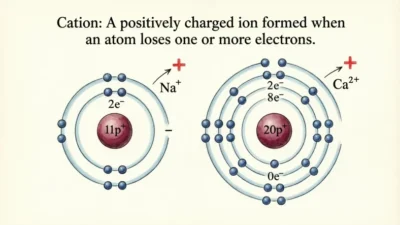
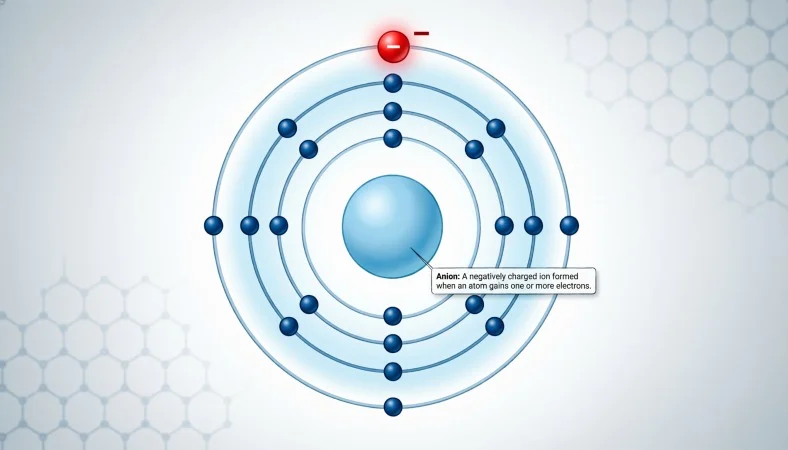
An anion is an atom or molecule that carries a negative charge. It gains one or more electrons, which gives it this negative property. In simple words, an anion is a particle that wants to balance out its charge by having extra electrons. These negatively charged particles are very important in chemistry and biology because they interact with positively charged particles, called cations, to form compounds.
How Anions Are Different from Cations
While anions are negatively charged, cations are positively charged. Cations lose electrons, while anions gain them. Think of it like a magnet: opposites attract. That is why anions and cations often come together to form salts, such as table salt (sodium chloride). Understanding this basic difference is essential if you are learning chemistry, studying biology, or reading scientific articles online.
Common Examples of Anions
Some anions you might hear about include:
- Chloride (Cl⁻) – Found in table salt.
- Sulfate (SO₄²⁻) – Common in minerals and fertilizers.
- Nitrate (NO₃⁻) – Important for plants.
- Hydroxide (OH⁻) – Found in bases like sodium hydroxide.
- Phosphate (PO₄³⁻) – Essential for DNA and energy molecules like ATP.
These examples show how anions appear in everyday life, from the food you eat to the plants in your garden.
Why Do People Talk About Anions in Text?
In chats or social media, “anion” may appear in study discussions, science memes, or casual chemistry jokes. Students often ask questions like, “What is the anion in HCl?” or “Which anion is in this solution?” Online discussions on WhatsApp or Snapchat study groups make the word popular among learners. Even Instagram pages dedicated to science post facts and quizzes that include anions.
How Anions Function in Chemistry
Anions play a critical role in chemical reactions. They often:
- Attract positively charged ions.
- Form ionic compounds.
- Participate in acid-base reactions.
- Help in electricity conduction in solutions.
For instance, when salt dissolves in water, chloride ions (anions) move freely and interact with sodium ions (cations), creating a solution that can conduct electricity. This explains why anions are important in labs, biology, and even industrial processes.
Anions in Biology
Anions are not just chemistry terms; they are also essential in living organisms. For example:
- Chloride ions (Cl⁻) help maintain fluid balance in the body.
- Phosphate ions (PO₄³⁻) store and release energy in cells.
- Bicarbonate ions (HCO₃⁻) regulate blood pH.
Without anions, many biological processes would stop. They maintain balance, help transmit nerve signals, and support metabolism.
How Students Use Anion in Text
Students often use “anion” in study-related chats:
Example 1:
A: What is the anion in NaOH?
B: OH⁻
Example 2:
A: Can anyone explain nitrate anion?
B: It’s NO₃⁻, and plants need it for growth.
Example 3:
A: Which anion is common in salts?
B: Chloride (Cl⁻), mostly.
This shows that anion is commonly used in educational chats and science discussions.
Anion Meaning in Everyday Life
Even outside the classroom, anions appear in daily life:
- Household cleaning products: Hydroxide ions (OH⁻) are used in soap and detergents.
- Air purification: Some devices release negative ions (anions) to clean the air.
- Water treatment: Sulfate or chloride ions are often monitored.
People may use the word casually online, for example: “This purifier releases anions for fresh air,” which may confuse someone without a science background.
How to Recognize Anions
You can usually identify an anion by its negative charge (⁻). Many chemical formulas show the charge clearly. In simple terms:
- If it gains electrons → negative → anion
- If it loses electrons → positive → cation
The negative sign is the easiest way to spot an anion in any chemical discussion.
Can Anions Be Dangerous?
Some anions are harmless, like chloride in salt. Others, if concentrated, can be harmful:
- Nitrate can contaminate water in high levels.
- Cyanide is an anion that is extremely toxic.
- Certain industrial anions may be dangerous if inhaled or ingested.
Always handle chemicals carefully and understand the context before talking about anions in practical use.
Common Confusions About Anions
Some people confuse anions with acids. Remember: anions are negatively charged ions. Acids are substances that release hydrogen ions (H⁺) in water. Acids may contain anions, but they are not the same thing. For example, hydrochloric acid (HCl) contains chloride anions (Cl⁻) in solution.
Why Anions Are Important in Learning
Anions are a core concept in chemistry and biology. Students and professionals use the term frequently because it explains:
- Ion interactions
- Electrolyte balance in the body
- Formation of salts
- Acid-base chemistry
- Industrial processes
Understanding anions helps in solving chemistry problems, understanding lab experiments, and discussing science online.
How Anions Are Used in Social Media
On Instagram, you may see posts like: “Fun facts about anions!” or “Negative ions for clean air.”
Snapchat study groups often include questions such as: “Identify the anion in H₂SO₄.”
WhatsApp chats among students might look like: “Does anyone remember the common anions for acids?”
The meaning remains the same: negatively charged particle. Context changes how casually or seriously it is used.
Similar Scientific Terms to Anion
- Cation – Positive ion
- Molecule – Two or more atoms bonded
- Electron – Negatively charged particle
- Ion – Charged atom or molecule
- Electrolyte – Substance containing ions that conduct electricity
These terms often appear alongside anions in study materials, social media posts, and science discussions.
FAQs
What is an anion?
A negatively charged atom or molecule.
How is an anion different from a cation?
Anions are negative; cations are positive.
Can anions be harmful?
Some anions are toxic at high concentrations.
Where are anions found in biology?
Chloride, phosphate, and bicarbonate ions are common in the body.
Is anion commonly used in text?
Yes, mostly in study or science-related chats.
Does every atom form an anion?
No. Only atoms that can gain electrons form anions.
Can anions exist in everyday life?
Yes. Soap, salts, and air purifiers use anions.
Are anions part of acids?
Acids may contain anions, but the term acid and anion are not the same.
Conclusion
Anions are negatively charged atoms or molecules that play a key role in chemistry, biology, and daily life. They interact with cations to form salts, help regulate biological processes, and even improve air quality in some devices.
you see them in textbooks, WhatsApp study groups, Instagram science posts, or Snapchat chats, the meaning stays the same.
Understanding anions makes it easier to follow chemistry discussions, solve problems, and participate confidently in science conversations.

Sarah Parker is a creative writer at wishesfuel.com, crafting heartfelt, modern, and viral-style wishes that inspire readers to celebrate moments with joy, emotion, and meaningful expression every day in life.