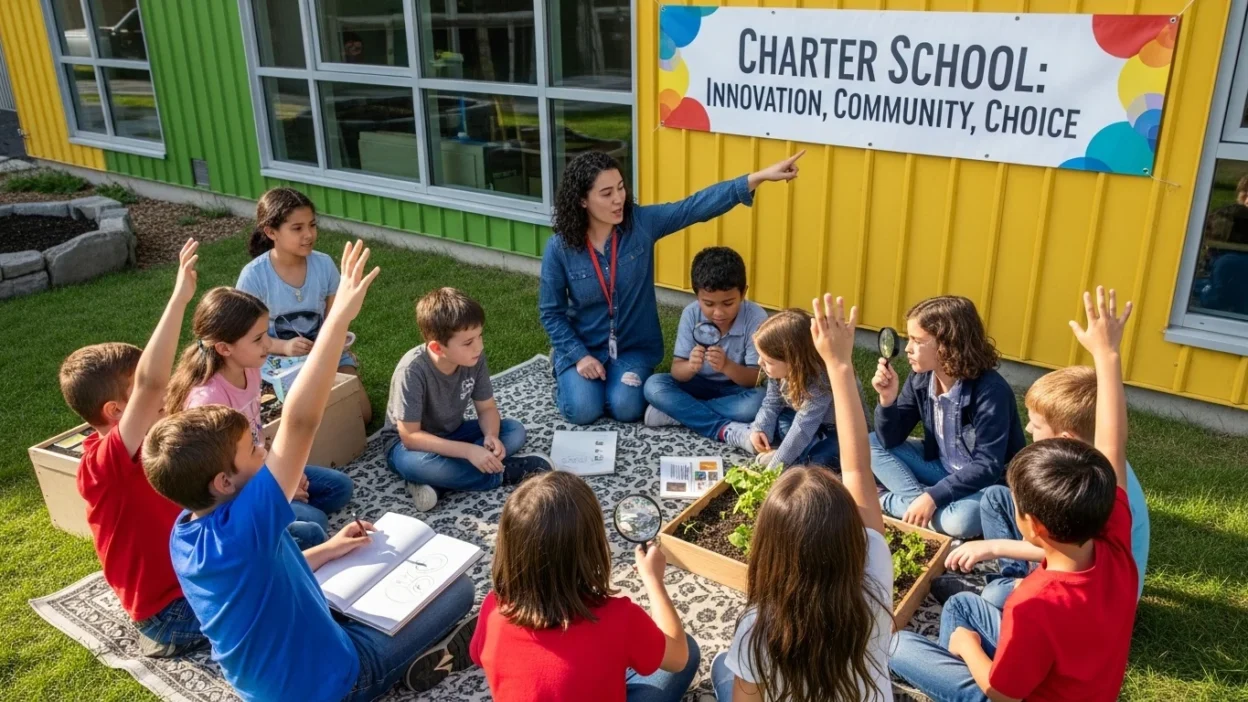
You might have heard someone say, “My kid goes to a charter school,” and wondered what it actually means. Many parents and students feel confused. Is it a private school? Is it like a public school?
This question often comes up in conversations on WhatsApp, Instagram, and even Twitter. People want to know the charter school meaning to understand how it differs from other schools. In this guide, we will explain everything in very simple English, provide examples, and help you understand its pros, cons, and how people talk about it online.
What Does Charter School Mean?
A charter school is a type of public school that works independently. It follows some rules of public schools but has more freedom to decide on teaching methods and programs.
Students do not pay tuition to attend. The school is open to all children, just like public schools.
The main goal is to offer a different kind of learning experience. Some focus on arts, STEM, or bilingual education.
How Charter Schools Work
Charter schools receive government funding. Unlike traditional public schools, they are managed by a charter or contract. This contract gives them flexibility in teaching, curriculum, and management.
Teachers can try new ways to teach. Students may follow unique schedules or programs.
Parents often choose charter schools because of specialized programs or a smaller classroom environment.
Why Do People Prefer Charter Schools?
Many families like charter schools because they offer options that traditional public schools may not. Some examples include:
- Focus on technology and coding
- Emphasis on arts, music, or sports
- Programs for gifted students
- Smaller class sizes
- Innovative teaching methods
Charter schools aim to improve student learning by trying new ideas that public schools may not always use.
Differences Between Charter Schools and Public Schools
Charter schools are funded by the government, just like public schools. However, they operate independently. Public schools must follow strict government rules for teaching, curriculum, and administration.
Charter schools have more freedom. They can decide:
- What curriculum to teach
- How long classes last
- Special programs for students
Public schools follow a standardized system. Charter schools experiment with new methods.
Charter Schools vs Private Schools
Private schools are funded by tuition fees. They are not free for students. Charter schools, on the other hand, are free to attend.
Both types may have special programs, but charter schools are open to everyone. Private schools often require entrance exams or interviews.
Charter schools are accountable to the government. Private schools are not.
Common Misunderstandings About Charter Schools
Some people think charter schools are only for rich families. This is false. Charter schools are free and open to all students.
Others may believe teachers are not qualified. In reality, charter school teachers must meet state certification standards.
Charter schools are sometimes confused with private schools. Remember: they are public and free.
Charter School Programs and Specialization
Many charter schools focus on specialized education. For example:
- STEM schools for science and technology
- Arts schools for music, drama, and visual arts
- Language immersion schools for bilingual education
- Leadership or entrepreneurship programs
Students and parents can choose schools that match their interests and learning styles.
How Charter Schools Are Funded
Charter schools get funding from local and state governments. The amount depends on enrollment, just like public schools.
Some schools also receive grants or donations from private organizations. They cannot charge tuition fees for regular students.
The funding model encourages schools to improve learning outcomes because their budget often depends on student performance.
Pros of Charter Schools
Charter schools have several advantages:
- More freedom for teachers
- Innovative programs
- Smaller class sizes
- Choice for parents and students
- Focused curriculum in specific areas
Many families choose charter schools for these benefits, especially if traditional schools do not meet their needs.
Cons of Charter Schools
Like any system, charter schools also have challenges:
- Limited availability in some areas
- Mixed academic performance
- Some schools may prioritize certain programs over general education
- High competition for admission in popular schools
It is important to research a charter school before enrolling.
How Charter Schools Are Viewed by Parents
Parents often see charter schools as a way to give their children better opportunities. Many believe smaller classes and specialized programs improve learning outcomes.
Some parents worry about quality control because schools operate independently. Still, most charter schools must meet performance standards set in their contract or charter.
How Charter Schools Are Viewed by Teachers
Teachers in charter schools often enjoy more freedom. They can use creative teaching methods and implement new learning techniques.
However, teachers may face higher accountability. Student performance and school evaluations can directly affect their work.
Charter Schools and Social Media Conversations
People discuss charter schools on platforms like Instagram, Facebook, and Twitter. Parents often share experiences, post reviews, or ask for recommendations.
Some hashtags include:
- #CharterSchoolLife
- #EducationChoice
- #SchoolOptions
Social media helps parents compare programs and find schools that fit their child’s needs.
Admission Process for Charter Schools
Most charter schools use a lottery system when spots are limited. Parents submit an application, and a random lottery chooses students.
Some schools may have additional requirements:
- Entrance exams
- Interviews
- Interest in specific programs
This ensures fair access to all students.
Charter School Curriculum
Charter schools can design unique curriculums. Some focus on:
- STEM or technology
- Arts and humanities
- Language immersion
- Leadership and entrepreneurship
This flexibility allows teachers to tailor education to student needs.
Accountability in Charter Schools
Despite independence, charter schools are accountable. They must meet performance goals in:
- Student test scores
- Graduation rates
- Attendance
- Financial management
If a school fails to meet its goals, it may lose its charter and funding.
Common Questions About Charter Schools
Is a charter school the same as a private school?
No. Charter schools are free and public, unlike private schools.
Do charter schools perform better than public schools?
It depends. Some schools perform very well, others average.
Are charter schools safe for students?
Yes. They follow the same safety and certification standards as public schools.
Can any student enroll in a charter school?
Yes, all children can apply. Admission may depend on space.
Do teachers in charter schools earn more?
Salaries vary. Some may earn more, some the same as public school teachers.
Tips for Choosing a Charter School
Parents should consider:
- School focus and programs
- Student-teacher ratio
- Location and transportation
- Admission requirements
- Parent reviews and success stories
Research helps find the right fit for your child.
How Charter Schools Impact Communities
Charter schools can improve education options in communities. They introduce competition, which can encourage traditional public schools to improve.
They also provide alternative programs that may not be available elsewhere.
Myths About Charter Schools
- Only for wealthy families – False.
- Teachers are not qualified – False.
- They are experimental schools without oversight – False.
Charter schools are public schools with freedom and accountability.
How Parents Discuss Charter Schools Online
Parents often ask:
- Which charter school is best for STEM?
- How do I get my child admitted?
- Is charter school better than public school?
Social media discussions provide experiences and honest opinions.
Role of State Governments in Charter Schools
State governments approve and monitor charter schools. They ensure schools meet academic and financial standards.
Each state has different rules for how charter schools operate.
Future of Charter Schools
Charter schools are likely to grow as parents look for alternative education. New programs and innovative teaching methods will continue to emerge.
Students may benefit from more choice and personalized learning.
Conclusion
Charter schools are public schools that operate independently to offer more flexibility in teaching and curriculum. They are free to attend, open to all students, and often focus on specialized programs. Charter schools provide parents with options to find the right learning environment for their children. With accountability standards in place, these schools can offer quality education while allowing teachers to be innovative. Now you understand charter school meaning and can use this knowledge when talking about education choices, chats, or social media discussions.

James Miller is a creative writer at wishesfuel.com, crafting modern heartfelt and relatable wishes that inspire readers to celebrate life’s moments with originality, warmth, and meaningful expression every day always.