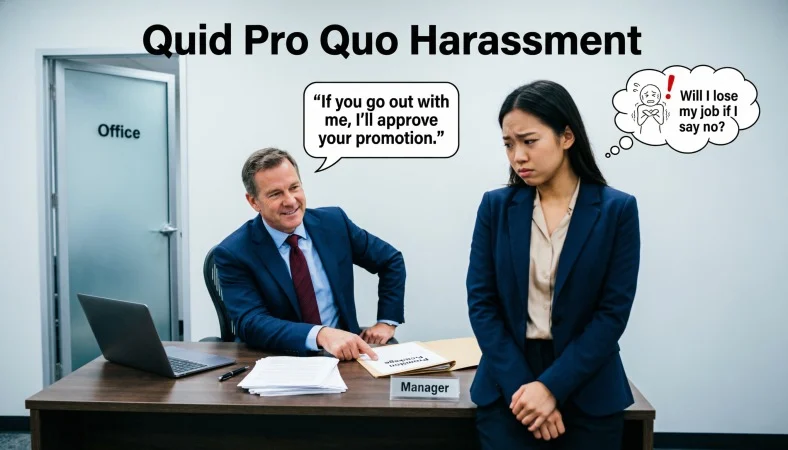
You may hear someone say, “That sounds like quid pro quo harassment.” At first, the phrase feels confusing. It sounds formal. It sounds legal. Many people see it in workplace stories, news articles, or online discussions.
Then they search for quid pro quo harassment meaning to understand it clearly.
This term is common in office talk, HR policies, and legal cases. It is not casual slang. It is serious. In this guide, you will learn what it means in simple English. You will also understand how it works, where it happens, and why it matters.
What Does Quid Pro Quo Harassment Mean?
Quid pro quo harassment means asking for favors in exchange for job benefits.
Usually, the favor is sexual.
The benefit could be a promotion, salary raise, job offer, or keeping a job.
In simple words, it means “this for that.”
One person in power offers something.
They expect something personal in return.
Understanding the Latin Phrase Behind It
The words “quid pro quo” come from Latin.
They mean “something for something.”
The phrase itself is not always bad.
In business, it can mean a fair exchange.
However, in harassment cases, it becomes wrong.
The problem starts when someone uses power to demand personal favors.
Workplace Situations Where It Happens
Most cases happen at work.
A manager may tell an employee:
“If you go out with me, I will promote you.”
That is quid pro quo harassment.
Sometimes it sounds like this:
“If you refuse me, you may lose your job.”
This is also harassment.
Power imbalance makes it serious.
The person in authority controls the outcome.
Power and Control in These Cases
Authority plays a big role.
A boss has control over hiring and promotions.
A teacher controls grades.
A supervisor manages schedules.
When someone uses that control to demand personal favors, it becomes harassment.
The victim may feel trapped.
Fear often keeps them silent.
How It Is Different From Other Harassment
Another type of workplace harassment is hostile work environment.
Hostile work environment includes jokes, comments, or unwanted behavior that makes the workplace uncomfortable.
Quid pro quo harassment is different.
It involves a direct exchange.
It includes a condition.
Do this, and you get that.
Refuse, and you face punishment.
That clear link makes it unique.
Examples to Make It Clear
Example 1
A boss says, “Have dinner with me and I will approve your promotion.”
Example 2
A supervisor says, “If you reject me, I will cut your hours.”
Each example shows power used in a wrong way.
Is Quid Pro Quo Harassment Illegal?
Yes, it is illegal in many countries.
Workplace laws protect employees.
In the United States, it is illegal under Title VII of the Civil Rights Act.
Many other countries have similar laws.
Companies must prevent this behavior.
Victims have the right to complain.
Who Can Be a Victim?
Anyone can face this problem.
Men can be victims.
Women can be victims.
Interns, students, and employees can be victims.
Gender does not matter.
Position does not matter.
The key factor is misuse of authority.
Who Can Be the Harasser?
Usually, the harasser has power.
It can be a boss.
It can be a teacher.
Sometimes, even a senior coworker can misuse influence.
The important part is control over benefits.
Emotional Impact on Victims
Victims often feel stress.
Anxiety may increase.
Work performance can suffer.
Some people feel fear.
Others feel shame.
Confidence may drop.
Mental health can suffer deeply.
The pressure feels heavy.
Signs That It May Be Happening
Certain signs may show a problem.
A supervisor makes personal requests tied to job rewards.
Threats appear after rejection.
Promotions depend on personal favors.
Private meetings feel uncomfortable.
Promises sound inappropriate.
These red flags should not be ignored.
What Should You Do If It Happens?
Stay calm.
Write down what happened.
Keep records of messages or emails.
Report the issue to HR.
Follow company policy.
Seek legal advice if needed.
Support from trusted people helps too.
Silence often protects the harasser.
Speaking up protects you and others.
Why Companies Take It Seriously
Businesses want safe workplaces.
Laws require protection.
Legal cases can damage reputation.
Financial penalties can be high.
Public trust can fall quickly.
For these reasons, companies create strict policies.
Training programs also teach employees about harassment.
Online Searches About Quid Pro Quo Harassment Meaning
Many people search this term after hearing it in news.
Some see it in workplace training.
Others read it in legal documents.
Curiosity leads them to look for simple meaning.
The phrase sounds complex.
The idea becomes simple once explained.
Is Quid Pro Quo Harassment Only Sexual?
Most cases involve sexual favors.
However, the key element is exchange under pressure.
If someone demands personal benefits tied to job power, it may still count.
Sexual nature makes it most common and serious.
That is why it appears in sexual harassment laws.
Difference Between Friendly Favor and Harassment
Two coworkers may agree to help each other.
That is normal.
A manager offering promotion only if personal favors are given is not normal.
Consent must be free.
Pressure removes real consent.
Power imbalance changes everything.
Legal Consequences for Harassers
Serious outcomes may follow.
The harasser can lose their job.
They may face lawsuits.
Fines may apply.
Reputation damage often lasts years.
Legal records stay permanent.
Consequences can be severe.
Preventing Quid Pro Quo Harassment
Clear company policies help.
Regular training builds awareness.
Open reporting systems encourage complaints.
Strong leadership sets good example.
Zero tolerance policies create safer workplaces.
Prevention always works better than punishment.
Why Awareness Is Important
Knowledge protects people.
Understanding rights builds confidence.
Clear meaning reduces confusion.
Education helps employees recognize warning signs.
Silence allows abuse to continue.
Awareness stops misuse of power.
Frequently Asked Questions
Is quid pro quo harassment always sexual?
Most cases involve sexual favors, but the key issue is misuse of power.
Can it happen outside the workplace?
Yes. It can happen in schools or any place with authority.
Is it illegal everywhere?
Many countries have laws against it, but rules may vary.
Do I need proof to report it?
Evidence helps, but reporting is still important.
Can men be victims?
Yes. Anyone can be affected.
Is joking about promotion considered harassment?
If tied to real power and pressure, it can be serious.
Conclusion
Quid pro quo harassment means asking for personal favors in exchange for job benefits. The phrase comes from Latin and means “this for that.” In workplace settings, it becomes illegal and harmful when someone in power uses authority to demand sexual or personal favors.
Victims may feel fear, stress, and pressure because their job depends on the decision. Laws protect employees, and companies must prevent this behavior.
Understanding quid pro quo harassment meaning helps people recognize warning signs and take action. Awareness creates safer workplaces and stronger protection for everyon.

Sarah Parker is a creative writer at wishesfuel.com, crafting heartfelt, modern, and viral-style wishes that inspire readers to celebrate moments with joy, emotion, and meaningful expression every day in life.