You may hear someone say, “That decision was based on utilitarianism.” You pause. What does that even mean? Is it about being useful? Is it about helping others? Many people see this word in books, debates, or social media posts and feel confused.
It sounds big and complex. That is why many users search for utilitarianism meaning online. They want a clear and simple explanation without hard words. Do not worry. This guide will explain everything in easy English. You will understand the idea, where it came from, and how it works in daily life.
What Does Utilitarianism Mean?
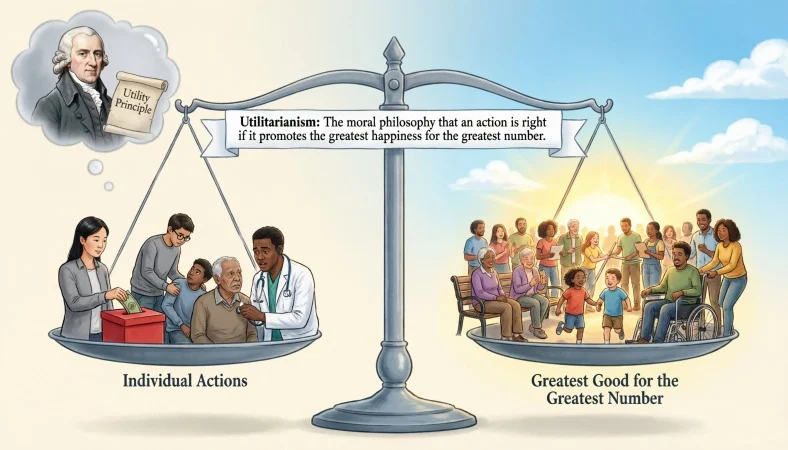
Utilitarianism is a moral theory.
It says the best action is the one that creates the most happiness for the most people.
The main goal is to increase happiness and reduce suffering.
In simple words, it means doing what helps the majority.
Basic Idea Behind This Philosophy
This theory focuses on results.
It does not only look at intention.
Instead, it asks one big question:
Does this action create more good than harm?
If yes, then it is the right choice according to utilitarianism.
Where Did Utilitarianism Come From?
The idea started in the 18th and 19th centuries.
Two famous thinkers helped develop it.
One was Jeremy Bentham.
The other was John Stuart Mill.
They believed happiness is the most important thing in life.
They wanted laws and rules that improve society.
Who Was Jeremy Bentham?
Jeremy Bentham was a British philosopher.
He said pleasure and pain guide human life.
According to him, people naturally want pleasure and avoid pain.
So, good actions increase pleasure.
Bad actions increase pain.
His idea was simple and direct.
Who Was John Stuart Mill?
John Stuart Mill expanded Bentham’s ideas.
He agreed that happiness matters most.
However, he said not all pleasures are equal.
For example, reading a book may be better than eating candy.
He believed higher pleasures are more valuable.
How Does Utilitarianism Work in Real Life?
Let’s look at an example.
Imagine a doctor has five sick patients. Each needs a different organ. One healthy person walks into the hospital. If the doctor sacrifices one to save five, more lives are saved.
From a utilitarian view, saving five creates more overall good.
But this example also shows how hard the theory can be.
Sometimes it feels uncomfortable.
Still, the focus remains on total happiness.
Everyday Examples You Can Understand
Here are simple daily examples:
A teacher gives extra help to weak students so most of the class passes.
A government builds a park that benefits thousands of people.
A company lowers prices so more customers can afford products.
In each case, the choice helps more people.
Why Is Happiness So Important in This Theory?
Utilitarianism believes happiness is the highest good.
People want joy.
People avoid suffering.
So actions should increase well-being.
This idea seems fair to many people.
After all, most of us want a happy society.
Types of Utilitarianism
There are different forms of this theory.
Act Utilitarianism
This form looks at each action separately.
It asks, “Does this act create the most happiness right now?”
If yes, then it is correct.
Rule Utilitarianism
This form focuses on rules.
It asks, “Which rules create the most happiness over time?”
Then it follows those rules.
Both aim for the same goal.
However, they use different methods.
Strengths of Utilitarianism
This theory has many good points.
It is simple to understand.
treats everyone equally.
It focuses on real results.
It encourages kindness.
Also, it supports fairness in many cases.
Criticism and Weaknesses
Not everyone agrees with utilitarianism.
Some problems exist.
It can ignore individual rights.
may justify unfair actions if they help the majority.
It is hard to measure happiness.
Different people feel happiness differently.
These challenges make debates interesting.
Utilitarianism in Law and Government
Many modern policies reflect utilitarian thinking.
Governments create laws to benefit the majority.
Taxes fund public services.
Healthcare programs aim to help large populations.
The idea is simple.
Help as many people as possible.
Utilitarianism in Business Decisions
Companies also use this logic.
They create products that serve many customers.
They make choices that increase overall satisfaction.
However, profit sometimes conflicts with happiness.
So balance is important.
Comparison With Other Moral Theories
Let’s compare it with another idea.
Deontology focuses on rules and duty.
It says some actions are always right or wrong.
Utilitarianism focuses on results instead.
Virtue ethics looks at character.
It asks what a good person would do.
Each theory has value.
Still, utilitarianism remains very popular.
Is Utilitarianism Good or Bad?
There is no simple answer.
Some people love its fairness.
Others dislike its tough decisions.
It works well in public policy.
It may feel harsh in personal cases.
Opinion often depends on situation.
Can Utilitarianism Be Used in Daily Life?
Yes, it can.
You already use it without knowing.
For example:
Sharing food so everyone eats.
Choosing a movie most friends like.
Helping many classmates instead of just one.
Small actions can reflect this idea.
Why Do People Search for Utilitarianism Meaning?
The word sounds complex.
It appears in exams.
It shows up in debates.
Students often see it in philosophy classes.
Social media discussions also mention it.
So many people want a simple explanation.
Simple Definition You Can Remember
Utilitarianism means choosing actions that create the greatest happiness for the greatest number of people.
That is the core idea.
Common Misunderstandings
Some think it means being selfish.
That is wrong.
It focuses on group happiness.
Others think it ignores morals.
Not exactly.
It has its own moral rule about happiness.
Practical Scenario Example
Imagine a city must choose between building a hospital or a luxury mall.
The hospital saves lives.
The mall creates jobs and shopping fun.
Leaders must measure total benefit.
Utilitarian thinking would support the option that helps more people overall.
Does Utilitarianism Ignore Minorities?
This is a major debate.
Critics say it can.
If majority happiness increases, minority pain might be ignored.
Supporters argue good rules protect everyone in the long term.
The discussion continues today.
Influence on Modern Society
This philosophy shapes public policy.
It affects healthcare planning.
influences environmental laws.
It even impacts animal rights discussions.
The idea remains powerful.
Conclusion
Utilitarianism is a moral theory that focuses on results. It says the best action is the one that creates the greatest happiness for the greatest number of people. This philosophy began with thinkers like Jeremy Bentham and John Stuart Mill. It looks at outcomes instead of intentions. Many governments and businesses use this idea when making decisions. While it has strengths, it also faces criticism. Still, the main concept is simple. Choose actions that increase overall happiness and reduce suffering. Now you understand utilitarianism meaning in clear and easy words.

Michael Davis writes inspiring and heartfelt messages for readers at wishesfuel.com, creating modern, uplifting wishes that make every celebration memorable and meaningful with his warm, creative voice and captivating style.