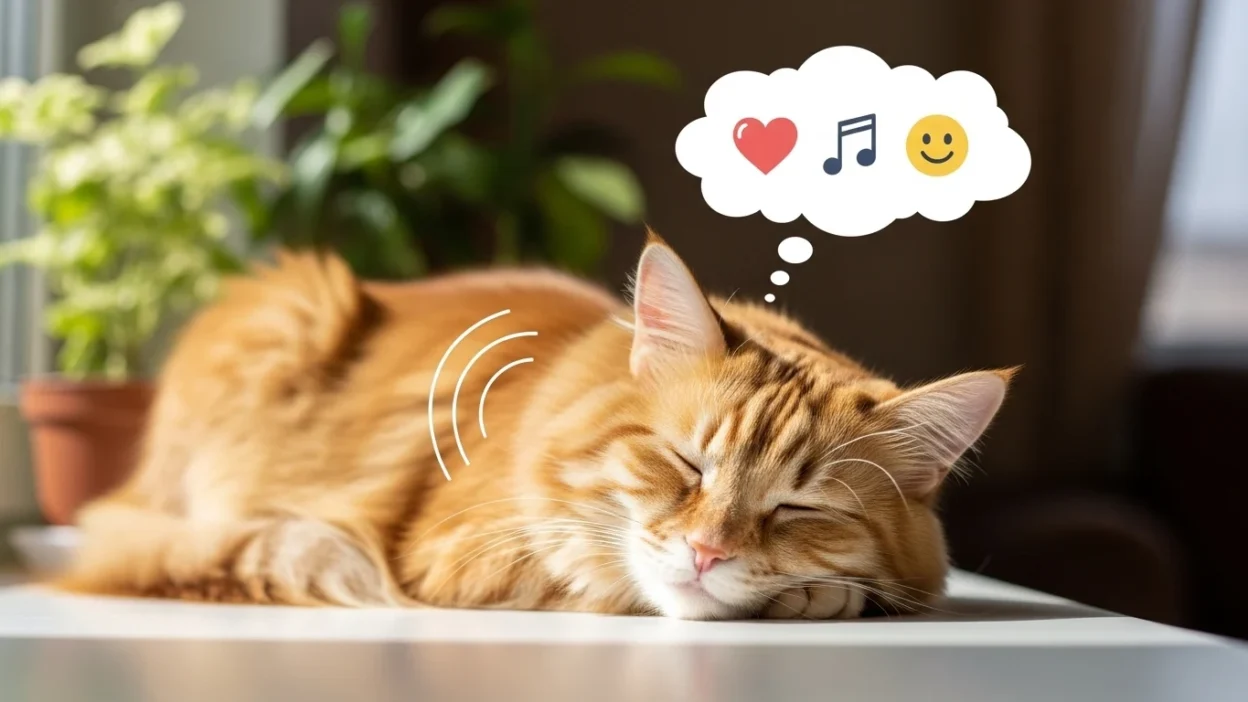
You are sitting on the sofa. Your cat jumps into your lap. Then you hear a soft “rrrrr” sound. It feels warm. It feels calm. You smile. But then you wonder. What does it mean when a cat purrs? Is your cat happy? Is it asking for food? Or is something else going on?
Many cat owners search this question online. They see their cat purring while sleeping, eating, or even at the vet. That can feel confusing. Some people think purring always means happiness. Others think it can mean pain. The truth is simple, but also a little surprising. Let’s break it down in easy words so you understand your furry friend better.
The Simple Meaning Behind Purring
Most of the time, that soft vibrating sound means your cat feels safe and relaxed.
It often shows comfort.
It can also show trust.
When your pet curls up next to you and makes that gentle sound, it usually feels good and calm. That is the most common reason.
Still, that is not the only reason cats do it.
How Do Cats Make That Sound?
Inside a cat’s throat, there are small muscles near the voice box. These muscles move very fast. Air passes through the throat. This creates the soft vibration you hear.
The mouth stays closed most of the time.
The sound happens when the cat breathes in and out.
It is like a tiny engine running inside their chest.
Happiness Is a Big Reason
Contentment is the top cause of this behavior.
You may notice it when:
- Your cat is sitting on your lap
- You are petting its head
- It is lying in the sun
- It is nursing kittens
In these moments, your pet feels peaceful.
The sound is like a smile in audio form.
Comfort and Safety Signals
Sometimes your cat makes this noise when it feels safe near you.
Kittens begin doing it when they are only a few days old. They do it while drinking milk from their mother. The mother cat also makes the same sound. This helps them bond.
Later in life, your pet may repeat this behavior with you.
It shows trust.
It shows connection.
Can Purring Mean Hunger?
Yes, it can.
Some cats make a special type of purring when they want food. It may sound a little louder. It may have a tiny cry mixed into it.
Researchers found that this sound grabs human attention faster.
So if your cat stands near the kitchen and makes that noise, it may be asking for a meal.
Stress and Pain Signals
Surprisingly, cats may also purr when they are scared or hurt.
For example:
- During a vet visit
- After an injury
- When feeling anxious
This can confuse owners.
In these cases, the sound works as a self calming tool. It helps the cat feel better. It is like deep breathing for humans.
So not every purr means joy.
Healing Power of Vibrations
Studies suggest that the vibration may help healing.
The frequency of the sound is between 25 and 150 Hertz.
This range may support:
- Bone healing
- Muscle repair
- Pain relief
That means the sound could help cats recover faster.
Some experts even believe it may have calming effects on humans.
Mother and Kitten Communication
Newborn kittens cannot see or hear well.
They depend on touch and vibration.
The mother cat purrs to guide them. The kittens answer back with soft sounds.
This creates a safe space.
It builds early bonding.
Attention Seeking Behavior
At times, your pet simply wants attention.
If you stop petting, the sound may get louder.
If you walk away, your cat may follow you while making that noise.
This means, “Stay with me.”
It is a gentle way of asking for love.
Does Every Cat Purr?
Most domestic cats do.
However, not all wild cats can.
Big cats like lions can roar but usually do not purr the same way house cats do.
Smaller wild cats can make similar sounds.
Each species is a little different.
Body Language Matters Too
To understand what does it mean when a cat purrs, look at body signals.
Check:
- Tail position
- Ear movement
- Eye shape
- Body posture
If the body looks relaxed, the sound likely means comfort.
If the body looks tense, it may signal stress.
Context is important.
Signs of a Happy Cat
Here are signs that the sound means happiness:
- Slow blinking
- Relaxed tail
- Soft eyes
- Kneading paws
- Lying on its side
These signs show comfort.
Signs of Stress
Here are warning signs:
- Ears pulled back
- Hiding behavior
- Fast breathing
- Wide eyes
- Stiff body
If these signs appear, your cat may not feel happy.
Always watch carefully.
Why Do Cats Purr While Sleeping?
You may hear the sound during naps.
This often means deep relaxation.
Your pet feels safe in its space.
It trusts the environment.
That is a good sign.
Purring at the Vet
Many owners feel confused when their cat makes this noise at the vet clinic.
It may look calm.
But it may feel nervous inside.
In this case, the sound works as self comfort.
It does not always mean joy.
Can Humans Feel the Vibration?
Yes.
When your cat sits on you, you can feel the gentle buzz.
This vibration can lower stress.
Many people say it feels soothing.
Spending time with a calm pet can reduce anxiety.
Why Some Cats Purr More Than Others
Every cat has a unique personality.
Some are very vocal.
Some are quiet.
Breed, age, and mood can affect how often they make this sound.
Older cats may purr more softly.
Kittens often purr loudly.
Is Loud Purring Normal?
Yes.
Some cats simply have stronger vibrations.
As long as your pet eats well and acts normal, loud purring is fine.
If you notice coughing or breathing trouble, talk to a vet.
Can Purring Stop?
Yes.
Cats may stop when:
- They feel scared
- They feel sick
- They are focused on hunting
- They are sleeping deeply
If your cat suddenly changes behavior, observe closely.
Emotional Meaning Behind the Sound
This gentle noise can show many emotions:
- Love
- Trust
- Comfort
- Stress
- Pain
- Hunger
That is why context matters so much.
The same sound can have different meanings.
How to Respond When Your Cat Purrs
If your pet seems happy:
Pet gently.
Speak softly.
Enjoy the moment.
If your pet seems stressed:
Give space.
Stay calm.
Watch for other signs.
Always respond with care.
Conclusion
Cats use purring as a powerful form of communication. In many cases, it shows comfort, happiness, and trust. At other times, it can signal stress, hunger, or even pain. The key is to look at the full picture. Body language, environment, and behavior all help you understand the real message. Now you know what does it mean when a cat purrs in different situations. With this knowledge, you can care for your furry friend in a smarter and kinder way.
Discover More Post
14th Marriage Anniversary Wishes for Wife For 2026
879+Anniversary Wishes for Masi and Mausa Ji For 2026

Sarah Parker is a creative writer at wishesfuel.com, crafting heartfelt, modern, and viral-style wishes that inspire readers to celebrate moments with joy, emotion, and meaningful expression every day in life.