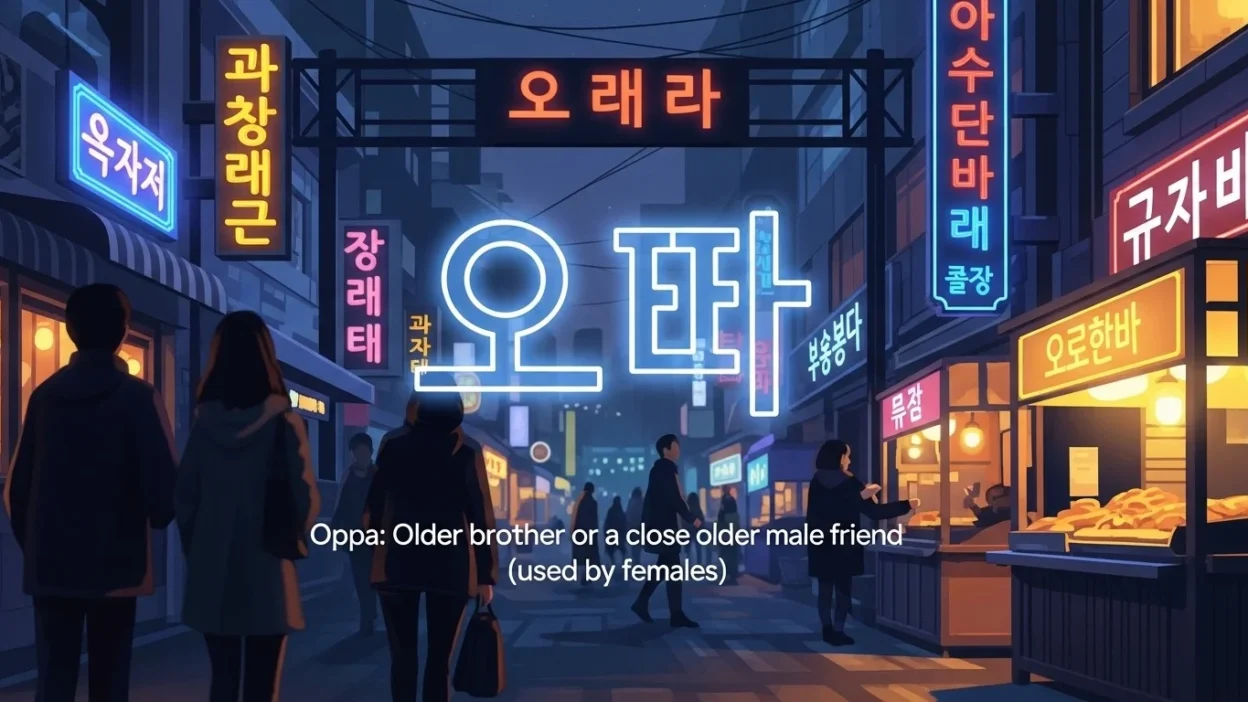
You are watching a Korean drama. The girl smiles and says, “Oppa!” The whole scene feels cute and romantic. But you pause. What does that word really mean? Is it a name? Is it a boyfriend term? Or is it something else?
Many people hear this word on TikTok, Instagram reels, K-dramas, and K-pop videos. Then they search online to understand it better. If you are curious too, you are in the right place. This guide will explain everything in very simple English. You will learn the real meaning, when to use it, when not to use it, and how it sounds in daily Korean life.
Let’s explore it step by step.
Basic Meaning in Simple Words
In Korean, this word is used by a girl to call an older male.
It can mean:
- Older brother
- Older male friend
- Boyfriend
- Husband
The meaning depends on the relationship.
It is not just a random cute word. It shows age difference and closeness.
Who Can Say This Word?
Only females use this term.
A girl says it to:
- Her older brother
- An older male cousin
- An older male friend
- Her boyfriend
- Her husband
Boys do not use this word for older males.
That is an important rule.
What Do Boys Say Instead?
Korean boys use a different word for older brothers or older male friends.
They say “hyung.”
So:
- Girl → older male → oppa
- Boy → older male → hyung
Korean language has special words based on gender and age.
Why Is This Word So Popular Worldwide?
K-dramas made it famous.
K-pop also helped a lot.
When fans watch romantic scenes, they hear girls saying it in a sweet voice. That made many international fans think it means “boyfriend.”
But the meaning is wider than that.
It is about respect and closeness.
Is It Only Romantic?
Not always.
In family situations, it simply means older brother.
friendships, it shows comfort and trust.
In romantic settings, it can sound cute or loving.
Tone changes everything.
Emotional Meaning Behind the Word
Korean culture values age and respect.
This word shows:
- The male is older
- The girl feels close to him
- There is warmth in the relationship
Sometimes it sounds protective.
Sometimes it sounds playful.
In romantic scenes, it can feel very sweet.
How Is It Used in Daily Life?
In Korea, people use it naturally.
Examples:
“Oppa, can you help me?”
“Oppa, let’s eat.”
“Oppa, thank you.”
It is part of normal speech.
is not slang.
It is real Korean language.
How It Sounds in K-Dramas
In dramas, it often sounds romantic.
A girl may say it when she feels shy.
She may say it when she needs help.
Sometimes she says it during emotional scenes.
That is why many fans connect it with love stories.
Can Foreigners Use This Word?
Yes, but carefully.
If you are not Korean, using it randomly can feel strange.
Korean people understand foreigners may say it because of dramas.
Still, it is better to know the relationship first.
Do not use it with strangers.
Is It Flirty?
Sometimes yes.
If a girl says it to her boyfriend in a soft tone, it sounds romantic.
If she says it to her real brother, it is normal and family-based.
So it can be flirty.
But it is not always flirty.
Is It Respectful?
Yes.
It shows respect for age.
Korean language has many honor words.
This term is one of them.
It shows hierarchy in a polite way.
When Should You Use It?
You can use it:
- If you are a girl
- If the male is older than you
- If you have a close relationship
- If you understand Korean culture
Use it in friendly or family situations.
When Should You Not Use It?
Avoid using it:
- If you are male
- If the person is younger than you
- If you do not know the person well
- In formal business meetings
- With strangers
Wrong use can feel awkward.
Meaning on Social Media
On TikTok and Instagram, fans use it in comments.
For example:
“Marry me, oppa!”
“Oppa is so handsome.”
In these cases, it is playful.
Fans use it for K-pop idols or actors.
It does not mean they really know them.
It is just fandom culture.
Cultural Importance
Korean society cares a lot about age order.
Older people receive respect.
Younger people speak politely.
This word fits into that system.
It is more than a cute term.
It is part of social structure.
Is It Offensive?
No, it is not rude.
But using it wrongly may sound silly.
If a boy calls another boy by this word, it is incorrect.
If you call a stranger this term, it may feel too personal.
So use it wisely.
Difference Between Family and Romantic Use
Family use:
It simply means older brother.
Romantic use:
It sounds sweet and loving.
Same word.
Different feeling.
Context matters a lot.
Common Misunderstandings
Some people think it only means boyfriend.
That is not true.
Some think anyone can say it.
That is also wrong.
Some think it is slang.
It is not slang.
It is a normal Korean word.
Tone and Voice Matter
A soft tone sounds romantic.
A normal tone sounds friendly.
An annoyed tone can sound playful or angry.
Even one word can change feeling with voice.
Examples in Conversation
Example 1
Girl: Oppa, are you busy?
Male: No, why?
Example 2
Girl: Oppa, I missed you.
Male: I missed you too.
Example 3
Girl: Oppa, help me with this.
Male: Okay.
Very simple.
Very natural.
Why Fans Love Saying It
K-pop fans feel connected to idols.
Calling them this word feels cute.
It creates fantasy romance vibes.
Still, it is mostly playful online.
Is It Used Outside Korea?
Mostly by K-pop and K-drama fans.
In real Korean communities abroad, it is used properly.
In fan culture, it is used casually.
FAQs
Does this word mean boyfriend?
Not always. It can mean older brother or older male.
Can boys say it?
No. Boys use a different word.
Is it romantic?
Sometimes. It depends on tone and situation.
Is it rude?
No. It is respectful when used correctly.
Can I call my Korean friend this?
Only if you are female and he is older.
Conclusion
This popular Korean word is used by girls to call an older male. It can mean older brother, boyfriend, husband, or close male friend. The meaning depends on age and relationship. It is not slang. It is part of Korean culture and respect system. Tone changes how it feels. Romantic scenes made it famous worldwide, but in real life it has a wider meaning. Now you understand it clearly and can use it properly.