You get your blood test report. You look at the numbers. One line says “Hemoglobin: Low.” You feel worried. What does that mean? Is it serious? Is it dangerous? Many people search what does low hemoglobin mean after seeing their lab results. It sounds medical and scary.
But the idea is simple. In this guide, you will learn what it means, why it happens, the symptoms, causes, and treatment options. Everything is explained in easy words so you can understand your health better.
Understanding Hemoglobin in Simple Words
Hemoglobin is a protein in your red blood cells.
Its job is very important.
It carries oxygen from your lungs to the rest of your body.
Your body needs oxygen to make energy.
Without enough oxygen, you feel weak and tired.
This protein also gives blood its red color.
What Does Low Hemoglobin Mean?
Low hemoglobin means your blood does not have enough of this oxygen-carrying protein.
Because of that, your body may not get enough oxygen.
This condition is often linked to anemia.
When levels drop below normal, doctors call it anemia in many cases.
Normal Hemoglobin Levels
Healthy levels are different for men, women, and children.
Here is a simple table:
| Group | Normal Range |
|---|---|
| Adult men | 13.8 to 17.2 g/dL |
| Adult women | 12.1 to 15.1 g/dL |
| Children | 11 to 16 g/dL |
If your number is lower than the normal range, it is considered low.
Your doctor looks at your age and gender before deciding.
Signs and Symptoms to Watch For
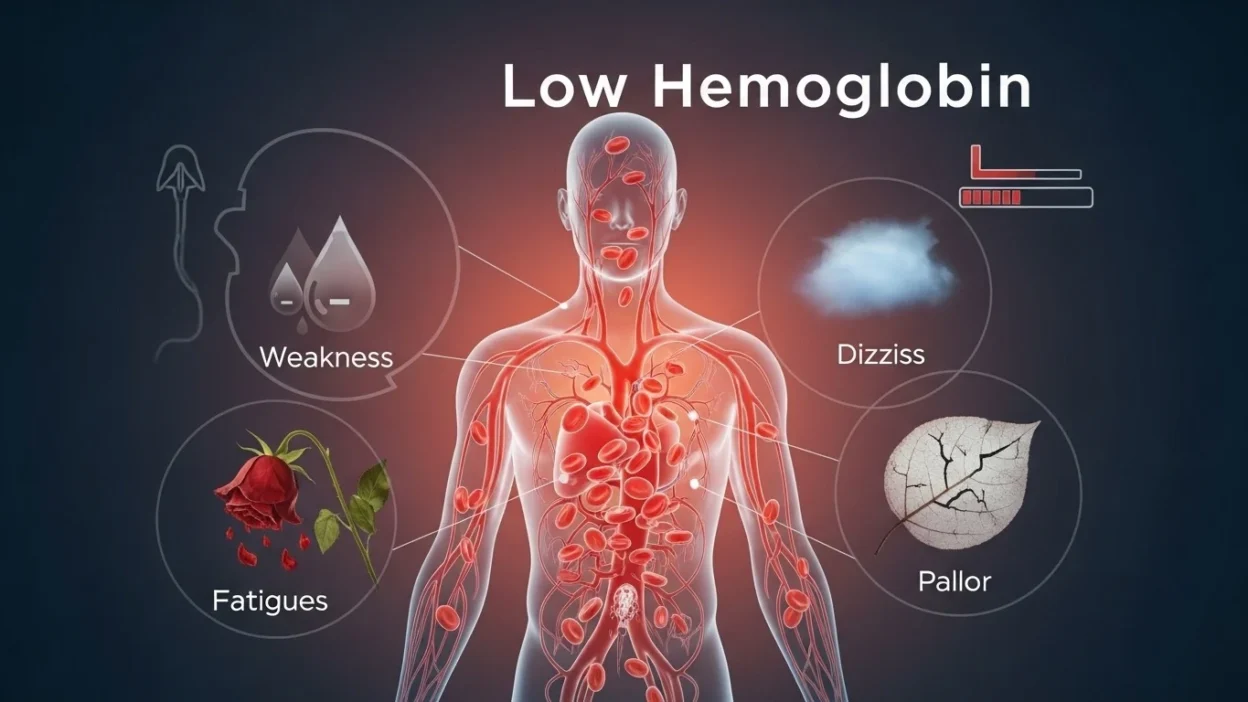
A drop in this protein can cause many symptoms.
Some people feel mild effects.
Others feel very weak.
Common symptoms include:
- Tiredness
- Weakness
- Pale skin
- Shortness of breath
- Dizziness
- Headaches
- Cold hands and feet
- Fast heartbeat
Sometimes symptoms appear slowly.
In mild cases, you may not notice anything.
Common Causes
There are many reasons why levels fall.
Iron Deficiency
Iron helps your body make hemoglobin.
If you do not get enough iron from food, levels can drop.
This is the most common cause worldwide.
Blood Loss
Losing blood reduces red blood cells.
Causes include:
- Heavy periods
- Stomach ulcers
- Injury
- Surgery
Even small but regular blood loss can cause problems over time.
Vitamin Deficiency
Your body also needs vitamin B12 and folate.
Without them, red blood cells cannot form properly.
Chronic Diseases
Long-term illnesses can lower production.
Examples include:
- Kidney disease
- Cancer
- Autoimmune disorders
Bone Marrow Problems
Bone marrow makes blood cells.
If it does not work well, levels may fall.
Who Is at Higher Risk?
Some groups are more likely to develop low levels.
These include:
- Pregnant women
- Young children
- Elderly people
- Vegetarians without proper planning
- People with long-term illness
Regular checkups help detect problems early.
Effects on the Body
When oxygen supply drops, your body struggles.
Your heart may work harder.
You may feel breathless after small tasks.
Brain function may slow down.
In severe cases, chest pain or fainting can happen.
That is why proper treatment matters.
When Should You See a Doctor?
You should visit a doctor if:
- You feel extreme tiredness
- You faint
- You have chest pain
- Your heart beats very fast
- You notice unusual bleeding
Do not ignore symptoms for a long time.
Early care prevents complications.
How Doctors Diagnose the Problem
A simple blood test checks hemoglobin level.
This test is called a Complete Blood Count.
It measures red blood cells and other parts of blood.
Sometimes doctors order extra tests to find the cause.
These may include:
- Iron tests
- Vitamin B12 test
- Kidney function test
- Stool test for hidden blood
The goal is to find the real reason.
Treatment Options
Treatment depends on the cause.
Iron Supplements
If iron deficiency is the reason, doctors give iron tablets.
It may take a few weeks to improve.
Vitamin Supplements
Low B12 or folate requires supplements.
These may be pills or injections.
Dietary Changes
Eating iron-rich foods helps a lot.
Examples:
- Spinach
- Red meat
- Beans
- Lentils
- Eggs
- Fortified cereals
Vitamin C helps iron absorption.
So add fruits like oranges.
Treating Underlying Conditions
If a disease causes the problem, that condition must be treated.
Blood Transfusion
In very severe cases, doctors may give blood transfusion.
This is usually for emergencies.
Foods That Help Improve Hemoglobin
Healthy eating plays a big role.
Here are helpful foods:
Iron-rich foods:
- Beef
- Chicken liver
- Fish
- Spinach
- Chickpeas
Vitamin B12 sources:
- Milk
- Cheese
- Eggs
- Meat
Folate sources:
- Green leafy vegetables
- Avocado
- Peas
Balanced meals support healthy blood levels.
Can It Be Prevented?
In many cases, yes.
Prevention tips:
- Eat balanced meals
- Include iron-rich foods
- Take prenatal vitamins during pregnancy
- Treat heavy periods
- Get regular health checkups
Small steps protect your health.
Is Low Hemoglobin Dangerous?
Mild cases are usually not dangerous.
Severe cases can be serious.
If oxygen supply drops too much, organs suffer.
The heart works harder.
Over time, this can cause complications.
That is why proper care matters.
Low Hemoglobin During Pregnancy
Pregnant women often develop anemia.
The body needs more iron to support the baby.
Doctors check levels regularly during pregnancy.
Supplements are often given to prevent problems.
Untreated anemia in pregnancy can cause:
- Premature birth
- Low birth weight
- Weakness in mother
Regular checkups keep both mother and baby safe.
Low Hemoglobin in Children
Children need iron for growth.
Low levels can affect:
- Learning
- Energy
- Growth
Parents should ensure healthy meals.
Pediatricians may suggest supplements if needed.
Recovery Time
Improvement depends on the cause.
Iron deficiency may improve in 4 to 8 weeks.
Severe cases take longer.
Chronic diseases require ongoing care.
Follow your doctor’s advice carefully.
Lifestyle Tips for Better Blood Health
Simple habits help:
- Sleep well
- Stay hydrated
- Eat fresh food
- Avoid junk food
- Do light exercise
Healthy habits support your body.
Frequently Asked Questions
Is low hemoglobin the same as anemia?
Often yes. Anemia usually means low hemoglobin.
Can stress cause low hemoglobin?
Stress alone does not usually cause it, but poor diet during stress can contribute.
Can drinking milk lower iron levels?
Milk does not lower iron directly, but too much milk may reduce iron absorption in children.
How fast can levels increase?
With proper treatment, improvement may start within weeks.
Should I panic if my report shows low levels?
No. Many cases are mild and treatable. Talk to your doctor calmly.
Conclusion
Low hemoglobin means your blood does not have enough oxygen-carrying protein. This can make you feel tired, weak, or dizzy. Many causes exist, but iron deficiency is the most common. The good news is that most cases are treatable with proper diet, supplements, and medical care. Regular checkups help detect problems early. If you notice symptoms, speak with a doctor. Understanding your health report gives you control and peace of mind.
Discover More Post
Feral Cat Meaning in Text, Chat, and Social Media in 2026
444 Meaning Money in Text, Chat, and Social Media in 2026

Michael Davis writes inspiring and heartfelt messages for readers at wishesfuel.com, creating modern, uplifting wishes that make every celebration memorable and meaningful with his warm, creative voice and captivating style.